Buy mdmusic.eu ?
We are moving the project
mdmusic.eu .
Are you interested in purchasing the domain
mdmusic.eu ?
domain@kv-gmbh.de · 0541-91531010
Buy mdmusic.eu ?
What questions are there about subject-verb agreement?
Some common questions about subject-verb agreement include: 1. How do I know which form of the verb to use with a singular or plural subject? 2. What about collective nouns or indefinite pronouns - do they take a singular or plural verb? 3. How do I handle compound subjects, where there are multiple nouns or pronouns joined by "and" or "or"? 4. Are there any exceptions or irregularities to the standard rules of subject-verb agreement? 5. What are some common mistakes to watch out for when it comes to subject-verb agreement? **
What is the difference between Subject-Verb-Object (SVO) and Subject-Subject-Verb (SSV) sentences?
The main difference between Subject-Verb-Object (SVO) and Subject-Subject-Verb (SSV) sentences lies in the order of the elements. In SVO sentences, the subject comes first, followed by the verb, and then the object. In SSV sentences, there are two subjects followed by the verb. This difference in structure can impact the emphasis and clarity of the sentence, as well as the overall flow of information. **


Similar search terms for Subject-verb agreement
Top-Angebote
Products related to Subject-verb agreement:
-
Lenovo Onsite Upgrade - extended service agreement - 3 years - on-siteLenovo Onsite Upgrade - Extended service agreement - parts and labour (for notebooks) - 3 years (from original purchase date of the equipment) - on-site - for ThinkPad P1; P40 Yoga; P50; P50s; P51; P51s; P52; P52s; P70; P71; P72; X1 Carbon; X1 Extreme; X1 Tablet; X1 Yoga; X380 Yoga; ThinkPad Yoga 20C0, 20CD; ThinkPad Yoga 12; 14; 15; 260; 370; 460114,99 £*Shipping: 0,00 £Secure redirect to the provider
-
Lenovo Onsite Upgrade - extended service agreement - 4 years - on-siteLenovo Onsite Upgrade - Extended service agreement - parts and labour (for notebooks) - 4 years - on-site - response time: NBD - for ThinkPad X1 Carbon Gen 10; X1 Extreme Gen 4; X1 Yoga Gen 6; X13 Yoga Gen 3151,99 £*Shipping: 0,00 £Secure redirect to the provider
-
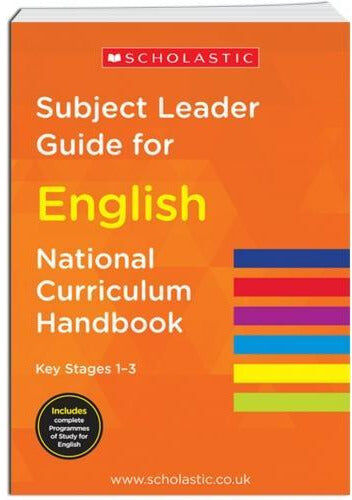
Scholastic National Curriculum Handbook Subject Leader Guide For English Key Stage 1-3National Curriculum Handbook Subject Leader Guide for English Key Stage 1-3 Description: Get ready for the biggest curriculum change in more than a decade! To help coordinators to deliver the new curriculum; Scholastic has published the first complete printed programme of study for key stages 1-3 in English. Each guide also provides a wealth of subject leader support including: an overview of the main changes to the curriculum; an overview of the subject leader's role at times of curriculum change; priority areas at each key stage; how to add creativity to the new curriculum; helpful subject leader's check-list. Scholastic; publisher of the best-selling 100 Lessons series; has partnered with Babcock Learning and Development Partnership (Devon Local Authority); one of the UK's leading school improvement services; to develop these essential subject guides.9,99 £*Shipping: 2,99 £Secure redirect to the provider
-
Acer Care Plus Carry-in Virtual Booklet - extended service agreement - 3 years - pick-up and returnAcer Care Plus Carry-in Virtual Booklet - Extended service agreement - parts and labour (for desktops) - 3 years - pick-up and return - must be purchased within 365 days of the product purchase - for Nitro 20; 50; 70; Predator Orion 3000; 5000; 700074,49 £*Shipping: 0,00 £Secure redirect to the provider



-
Is "leben" a subject or a verb?
"Leben" is a verb in German. It means "to live" in English. It is used to describe the action of being alive or residing in a particular place. **
-
Does it belong more to rhythm, melody, and harmony?
The concept of harmony is most closely related to the interaction of different notes and chords in music. Harmony refers to the simultaneous sounding of different pitches to create a pleasing sound. While rhythm and melody are also important elements in music, harmony specifically deals with the vertical aspect of music, focusing on how notes and chords interact with each other. Therefore, harmony belongs more to the realm of harmony itself. **
-
What is the difference between rhythm, melody, and harmony?
Rhythm refers to the pattern of sounds and silences in music, creating a sense of movement and pulse. Melody is the sequence of musical notes that are perceived as a single entity, often the most recognizable and memorable part of a song. Harmony involves the combination of different musical notes played or sung simultaneously, creating a pleasing sound. While rhythm provides the framework for the timing of music, melody is the main tune, and harmony adds depth and richness to the overall sound. **
-
What is the order of subject, verb, and object in Latin?
In Latin, the typical word order is Subject-Object-Verb (SOV). This means that the subject of the sentence comes first, followed by the object, and then the verb. For example, "puella rosam amat" translates to "the girl loves the rose," where "puella" is the subject, "rosam" is the object, and "amat" is the verb. However, Latin is a highly inflected language, so word order can be flexible and the meaning of the sentence is often determined by the case and ending of the words rather than their position in the sentence. **


How is the agreement of the past participle with the auxiliary verb avoir done?
In French, the past participle agrees with the direct object when the auxiliary verb is avoir. However, this agreement only occurs when the direct object comes before the verb. If the direct object comes after the verb, there is no agreement. For example, in the sentence "J'ai mangé la pomme" (I ate the apple), the past participle "mangé" agrees with the direct object "la pomme" because it comes before the verb. But in the sentence "J'ai mangé une pomme" (I ate an apple), there is no agreement because the direct object "une pomme" comes after the verb. **
What is an improvising melody instrument and an accompanying rhythm group?
An improvising melody instrument is a musical instrument that is capable of playing improvised melodies, such as the saxophone, trumpet, or guitar. These instruments are able to create spontaneous and unique melodies during a musical performance. An accompanying rhythm group consists of instruments that provide the rhythmic foundation for the music, such as drums, bass, and keyboard. Together, the improvising melody instrument and the accompanying rhythm group work together to create a dynamic and cohesive musical experience, with the melody instrument taking the lead and the rhythm group providing the underlying groove and support. **
Top-Angebote
Products related to Subject-verb agreement:
-
Graco Verb Travel System, MerrickThe Graco Verb Travel System gives you a stylish and smooth ride for your child. It includes a SnugRide Lite Infant Car Seat (for baby from 4-30 lb), which connects to the stroller with a secure, one-second attachment.239,99 $*Shipping: 0,00 $Secure redirect to the provider
-
Microsoft Extended Hardware Service Plan - extended service agreement - 3 yearsMicrosoft Extended Hardware Service Plan - Extended service agreement - replacement - 3 years (from original purchase date of the equipment) - response time: 3-5 business days - commercial - for Surface Laptop84,49 £*Shipping: 0,00 £Secure redirect to the provider
-
Lenovo Onsite Upgrade - extended service agreement - 3 years - on-siteLenovo Onsite Upgrade - Extended service agreement - parts and labour (for notebooks) - 3 years (from original purchase date of the equipment) - on-site - for ThinkPad P1; P40 Yoga; P50; P50s; P51; P51s; P52; P52s; P70; P71; P72; X1 Carbon; X1 Extreme; X1 Tablet; X1 Yoga; X380 Yoga; ThinkPad Yoga 20C0, 20CD; ThinkPad Yoga 12; 14; 15; 260; 370; 460114,99 £*Shipping: 0,00 £Secure redirect to the provider
-
Lenovo Onsite Upgrade - extended service agreement - 4 years - on-siteLenovo Onsite Upgrade - Extended service agreement - parts and labour (for notebooks) - 4 years - on-site - response time: NBD - for ThinkPad X1 Carbon Gen 10; X1 Extreme Gen 4; X1 Yoga Gen 6; X13 Yoga Gen 3151,99 £*Shipping: 0,00 £Secure redirect to the provider
-
What questions are there about subject-verb agreement?
Some common questions about subject-verb agreement include: 1. How do I know which form of the verb to use with a singular or plural subject? 2. What about collective nouns or indefinite pronouns - do they take a singular or plural verb? 3. How do I handle compound subjects, where there are multiple nouns or pronouns joined by "and" or "or"? 4. Are there any exceptions or irregularities to the standard rules of subject-verb agreement? 5. What are some common mistakes to watch out for when it comes to subject-verb agreement? **
-
What is the difference between Subject-Verb-Object (SVO) and Subject-Subject-Verb (SSV) sentences?
The main difference between Subject-Verb-Object (SVO) and Subject-Subject-Verb (SSV) sentences lies in the order of the elements. In SVO sentences, the subject comes first, followed by the verb, and then the object. In SSV sentences, there are two subjects followed by the verb. This difference in structure can impact the emphasis and clarity of the sentence, as well as the overall flow of information. **
-
Is "leben" a subject or a verb?
"Leben" is a verb in German. It means "to live" in English. It is used to describe the action of being alive or residing in a particular place. **
-
Does it belong more to rhythm, melody, and harmony?
The concept of harmony is most closely related to the interaction of different notes and chords in music. Harmony refers to the simultaneous sounding of different pitches to create a pleasing sound. While rhythm and melody are also important elements in music, harmony specifically deals with the vertical aspect of music, focusing on how notes and chords interact with each other. Therefore, harmony belongs more to the realm of harmony itself. **
Similar search terms for Subject-verb agreement
-
Scholastic National Curriculum Handbook Subject Leader Guide For English Key Stage 1-3National Curriculum Handbook Subject Leader Guide for English Key Stage 1-3 Description: Get ready for the biggest curriculum change in more than a decade! To help coordinators to deliver the new curriculum; Scholastic has published the first complete printed programme of study for key stages 1-3 in English. Each guide also provides a wealth of subject leader support including: an overview of the main changes to the curriculum; an overview of the subject leader's role at times of curriculum change; priority areas at each key stage; how to add creativity to the new curriculum; helpful subject leader's check-list. Scholastic; publisher of the best-selling 100 Lessons series; has partnered with Babcock Learning and Development Partnership (Devon Local Authority); one of the UK's leading school improvement services; to develop these essential subject guides.9,99 £*Shipping: 2,99 £Secure redirect to the provider
-
Acer Care Plus Carry-in Virtual Booklet - extended service agreement - 3 years - pick-up and returnAcer Care Plus Carry-in Virtual Booklet - Extended service agreement - parts and labour (for desktops) - 3 years - pick-up and return - must be purchased within 365 days of the product purchase - for Nitro 20; 50; 70; Predator Orion 3000; 5000; 700074,49 £*Shipping: 0,00 £Secure redirect to the provider
-
Electronic HP Care Pack Pick-Up & Return Service - extended service agreement - 3 years - pick-up and returnThe Electronic HP Care Pack Services (e-Care Pack) capability allows you to order, receive, update, and activate a wide range of valuable HP Care Pack Services over the Internet. Administered through the HP Services Network (CSN), it is a fast and simple process that enables immediate registration and service activation. Value-priced Pick-Up and Return Service provides high-quality door-to-door hardware service. It includes telephone support; pick-up of your failed HP branded hardware unit; repa15,99 £*Shipping: 0,00 £Secure redirect to the provider
-
Microsoft Extended Hardware Service Plan - extended service agreement - 3 years - carry-in - for Surface Pro 3, Pro 4Microsoft Extended Hardware Service Plan - Extended service agreement (for notebooks) - 3 years (from original purchase date of the equipment) - carry-in - commercial - for Surface Pro 3, Pro 484,49 £*Shipping: 0,00 £Secure redirect to the provider
-
What is the difference between rhythm, melody, and harmony?
Rhythm refers to the pattern of sounds and silences in music, creating a sense of movement and pulse. Melody is the sequence of musical notes that are perceived as a single entity, often the most recognizable and memorable part of a song. Harmony involves the combination of different musical notes played or sung simultaneously, creating a pleasing sound. While rhythm provides the framework for the timing of music, melody is the main tune, and harmony adds depth and richness to the overall sound. **
-
What is the order of subject, verb, and object in Latin?
In Latin, the typical word order is Subject-Object-Verb (SOV). This means that the subject of the sentence comes first, followed by the object, and then the verb. For example, "puella rosam amat" translates to "the girl loves the rose," where "puella" is the subject, "rosam" is the object, and "amat" is the verb. However, Latin is a highly inflected language, so word order can be flexible and the meaning of the sentence is often determined by the case and ending of the words rather than their position in the sentence. **
-
How is the agreement of the past participle with the auxiliary verb avoir done?
In French, the past participle agrees with the direct object when the auxiliary verb is avoir. However, this agreement only occurs when the direct object comes before the verb. If the direct object comes after the verb, there is no agreement. For example, in the sentence "J'ai mangé la pomme" (I ate the apple), the past participle "mangé" agrees with the direct object "la pomme" because it comes before the verb. But in the sentence "J'ai mangé une pomme" (I ate an apple), there is no agreement because the direct object "une pomme" comes after the verb. **
-
What is an improvising melody instrument and an accompanying rhythm group?
An improvising melody instrument is a musical instrument that is capable of playing improvised melodies, such as the saxophone, trumpet, or guitar. These instruments are able to create spontaneous and unique melodies during a musical performance. An accompanying rhythm group consists of instruments that provide the rhythmic foundation for the music, such as drums, bass, and keyboard. Together, the improvising melody instrument and the accompanying rhythm group work together to create a dynamic and cohesive musical experience, with the melody instrument taking the lead and the rhythm group providing the underlying groove and support. **
* All prices are inclusive of VAT and, if applicable, plus shipping costs. The offer information is based on the details provided by the respective shop and is updated through automated processes. Real-time updates do not occur, so deviations can occur in individual cases. ** Note: Parts of this content were created by AI.